Cost of Living in Green Mountain, Lakewood, Colorado
The cost of living in Green Mountain, Lakewood is approximately 8-10% above the national average, but that number is misleading if you do not break it down (Source: BestPlaces, 2026). Housing is the driver, plain and simple. The median listing price in Green Mountain sits at roughly $750,000 as of April 2026 (Source: Movoto, April 2026), while groceries, utilities, and transportation run at or below national averages. If you are relocating from the Bay Area, Chicago, or the Seattle metro, Green Mountain will feel noticeably more affordable. If you are moving from a lower-cost market in the Midwest or South, the housing cost will be the sticker shock, but everything else should feel familiar.
Last Updated: April 2026
I live in this neighborhood, and I track every cost category that affects my clients' buying and selling decisions. This guide breaks down what you will actually spend each month in Green Mountain, category by category, so you can budget accurately before making a move.
This post is part of the Complete Guide to Living in Green Mountain, Lakewood.
H2: What Does Housing Cost in Green Mountain?
Housing is the single largest line item in any Green Mountain budget, and it is the category that separates this neighborhood from the national average. The median listing price is approximately $750,000 (Source: Movoto, April 2026), though the trailing 12-month median sale price comes in closer to $655,000 to $672,000 (Source: Homes.com, February 2026). Townhomes start in the mid-$280s, while single-family homes range from the mid-$500s to over $900,000. On a $750,000 purchase with 20% down ($150,000), a 30-year fixed mortgage at the current average of 6.37% (Source: Freddie Mac, April 9, 2026) gives you a principal and interest payment of approximately $3,745 per month. If you are renting, the average apartment rent in Lakewood is $1,800 per month for a one- or two-bedroom unit (Source: RentCafe, February 2026), though Green Mountain-area apartments near the open space tend to run $1,770 to $2,100 depending on size and amenities. For a deeper dive into home prices by tier, see my complete Green Mountain home price breakdown.
H2: How Much Are Property Taxes in Green Mountain?
Jefferson County property taxes are a pleasant surprise for buyers coming from higher-tax states. The effective property tax rate in Jefferson County runs approximately 0.51% to 0.66% of market value (Source: SmartAsset, 2026; Ownwell, 2026), which is well below the national median of 1.02%. On a $750,000 Green Mountain home, that translates to roughly $3,800 to $4,950 per year, or $317 to $413 per month. Colorado calculates property tax using an assessed value formula: for 2026, the residential assessment rate is 6.8% after a 10% reduction on the first $700,000 of actual value (Source: Colorado Dept. of Property Taxation, 2026). The assessed value is then multiplied by the local mill levy, which varies by taxing district. In the Green Mountain area, total mill levies typically range from 85 to 105 mills depending on which school district, fire district, and special districts overlap your property. Taxes are paid one year in arrears, meaning your 2025 tax bill is payable in 2026 (Source: Jefferson County Treasurer). For the full property tax breakdown, see my Green Mountain property tax guide. <!-- FUTURE LINK: activate when published -->
H2: What Do Utilities Cost in Green Mountain?
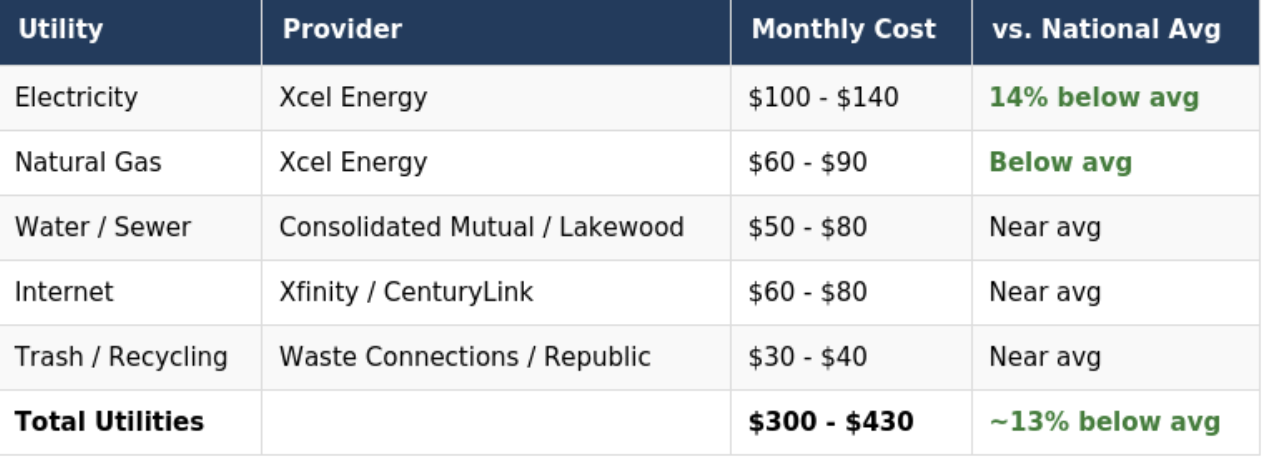
Utilities are one of the categories where Green Mountain actually saves you money compared to national averages. Colorado's energy costs run roughly 13-14% below the national average (Source: Redfin Cost of Living, 2026), thanks in part to Xcel Energy's residential rate of approximately 14.5 cents per kWh, which is 14% below the national average of 16.8 cents (Source: OhmSnap / Xcel Energy R tariff, 2026). A typical Green Mountain household using about 600-900 kWh per month pays $100 to $140 for electricity. Natural gas, also through Xcel Energy, adds $60 to $90 per month depending on season, with winter heating months running higher. Water and sewer through the Consolidated Mutual Water Company or the City of Lakewood typically costs $50 to $80 per month. Internet through Comcast/Xfinity or CenturyLink runs $60 to $80 per month. One important note: Xcel Energy has proposed a 9.9% electric rate increase that could take effect in August 2026 (Source: Xcel Energy 2025 Colorado Electric Rate Review), which would add approximately $10 per month to the average residential bill. Even with this increase, Colorado electricity costs remain below national averages.
H2: How Much Do Groceries and Everyday Expenses Cost?
Groceries in the Lakewood and Denver metro area run approximately 2% above the national average (Source: Redfin Cost of Living, 2026; RentCafe, March 2026), which is barely noticeable on a monthly budget. A single adult can expect to spend $350 to $500 per month on groceries depending on habits, while a family of four typically lands between $900 and $1,200. Green Mountain residents have solid options within a short drive: King Soopers on West Alameda, Natural Grocers (headquartered right in Lakewood), Sprouts, and Costco on West Colfax are all within 10 minutes. Dining out is where the Denver metro premium shows up more clearly. A casual sit-down meal runs about $18 to $22 per person, and a coffee from a local shop costs $5 to $6. That said, Lakewood offers noticeably lower restaurant prices than downtown Denver neighborhoods like RiNo or LoDo. Clothing costs about 10% above the national average (Source: RentCafe, March 2026), and healthcare services run approximately 12-19% above the national average depending on the source, though St. Anthony Hospital is right in the Green Mountain area, offering convenient access without the drive to downtown medical centers.
H2: What About Transportation Costs?
Transportation in the Lakewood area is close to or slightly below the national average (Source: ERI, 2026; Redfin, 2026). Gas prices in Colorado fluctuate but have historically been reasonable relative to coastal states. The average commute time from Green Mountain is approximately 20-25 minutes, which is right in line with the Lakewood average of 23 minutes (Source: U.S. News, 2026). Most Green Mountain residents drive, and the neighborhood's proximity to C-470, West Alameda Parkway, and 6th Avenue makes commuting to downtown Denver, the Denver Federal Center, the Denver Tech Center, or Golden straightforward. RTD bus service runs along Green Mountain's east side, and the W Line light rail is accessible from the Federal Center Station, though most residents here rely on personal vehicles. Auto insurance in Colorado runs above the national average, typically $1,800 to $2,400 per year for full coverage, partly driven by Colorado's high hail frequency and uninsured motorist rates. If you are working remotely, which a significant percentage of Green Mountain buyers now do, your transportation costs drop dramatically, and this neighborhood's trail access becomes a daily lifestyle benefit rather than a weekend luxury.
H2: How Does Colorado's Tax Structure Affect Your Cost of Living?
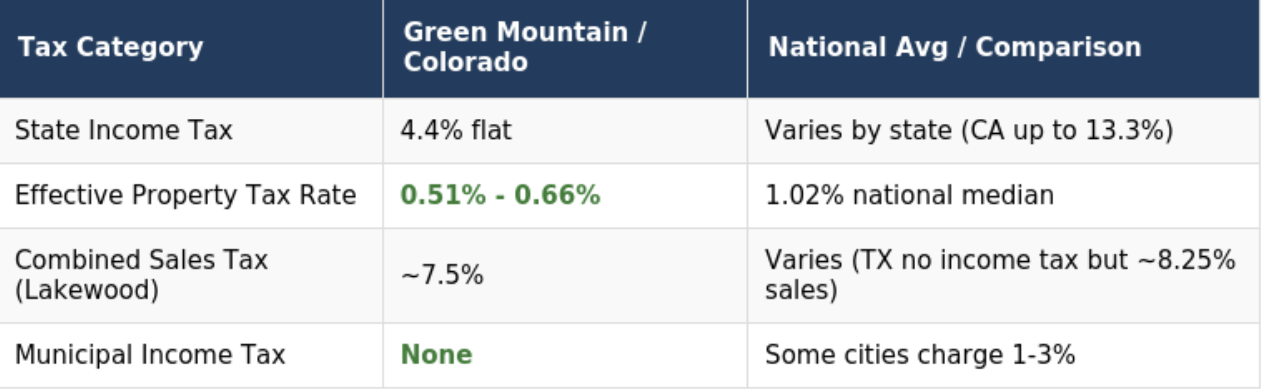
Colorado's tax structure is one of the most favorable aspects of living in Green Mountain, particularly if you are coming from a high-tax state. Colorado charges a flat 4.4% state income tax regardless of income level (Source: Colorado Dept. of Revenue, 2026). There are no municipal income taxes in Lakewood. The combined state and local sales tax rate in Lakewood is approximately 7.5%, which includes the 2.9% state rate plus the Jefferson County and City of Lakewood portions. Property taxes, as covered above, are well below national averages. For relocators from California (state income tax up to 13.3%), Illinois (flat 4.95%), or high-tax metro areas, the savings on income and property taxes alone can offset a significant portion of the housing premium. Colorado also issues TABOR (Taxpayer's Bill of Rights) refunds in years when state revenue exceeds constitutional limits, effectively returning tax dollars to residents.
H2: What Does a Realistic Monthly Budget Look Like in Green Mountain?
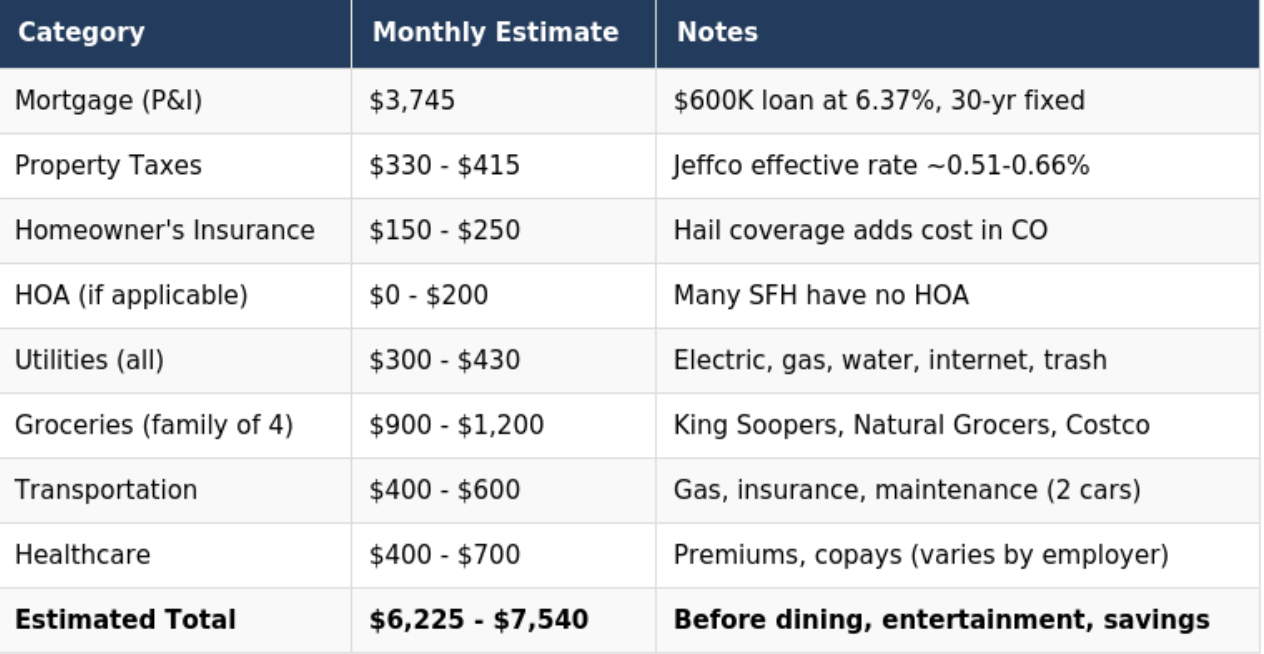
Here is what I see most of my clients actually spend when they settle into Green Mountain. This budget assumes a homeowner with a $750,000 purchase, 20% down, and a household income of approximately $140,000 to $160,000 per year.
These numbers are based on actual client budgets and current market data. Your specific costs will vary based on home price, insurance coverage, family size, and commuting habits. If you buy in the mid-range tier around $650,000 instead of $750,000, your mortgage payment drops to approximately $3,120 per month, bringing the total monthly estimate down to $5,600 to $6,900.
H2: How Does Green Mountain Compare to Denver and Other Lakewood Neighborhoods?
Green Mountain sits at a premium compared to the broader City of Lakewood. The citywide Lakewood median home value is approximately $573,000 (Source: Zillow, March 2026), while Green Mountain's median listing runs about $750,000, a roughly 30% premium. That premium reflects specific things: trail access to the 2,400-acre William Frederick Hayden Park, strong Jeffco schools like Devinny Elementary and Dunstan Middle, a near-zero vacancy rate, and mature neighborhood character with lots averaging 8,000 to 12,000+ square feet. Compared to Denver proper, where the cost of living is approximately 9% above the national average (Source: RentCafe, March 2026), Green Mountain offers larger homes, bigger yards, better public school ratings, lower crime, and direct trail access from your door, all for comparable or slightly higher housing costs. The Denver-Aurora-Lakewood CPI-U increased 4.2% year-over-year through March 2026 (Source: BLS, March 2026), driven primarily by energy (+13.2%) and owners' equivalent rent (+3.8%). Green Mountain is not immune to these increases, but the neighborhood's established housing stock and stable ownership base insulates it from the volatility that hits newer developments.
CTA BLOCK
Ready to run the numbers on your specific Green Mountain budget?
I work with buyers every week who need real, neighborhood-specific cost projections, not generic metro-wide estimates. I can walk you through what your actual monthly costs would look like based on the exact price tier, lot location, and financing you are considering.
Email Katerina directly:KaterinaVeteskova@Gmail.comCall or text: 720-646-4685 Website:www.LivingInGreenmountain.com
Katerina Veteskova is a Green Mountain real estate specialist with Living in Green Mountain, serving buyers and sellers throughout the Green Mountain neighborhood of Lakewood, Colorado.
H2: Frequently Asked Questions About the Cost of Living in Green Mountain
Q: Is Green Mountain, Lakewood expensive to live in? A: The overall cost of living is approximately 8-10% above the national average, but that gap is driven almost entirely by housing costs. Groceries, utilities, and transportation are near or below national averages, which makes the day-to-day cost of living feel reasonable for most households earning $130,000 or more per year.
Q: What salary do you need to afford a home in Green Mountain? A: Using the standard 28% front-end debt ratio, you need a household income of approximately $134,000 to $139,000 to afford the median-priced home at $750,000 with 20% down. The average household income in Green Mountain is approximately $147,000 (Source: Homes.com, 2026).
Q: How much are utilities in Green Mountain, Lakewood? A: Total utilities for a typical single-family home, including electricity, gas, water, internet, and trash, average $300 to $430 per month. Colorado energy rates are roughly 13-14% below the national average, though Xcel Energy has proposed a 9.9% rate increase that could take effect in August 2026.
Q: How do property taxes in Green Mountain compare to other states? A: Jefferson County's effective property tax rate of 0.51% to 0.66% is well below the national median of 1.02%. On a $750,000 home, expect to pay approximately $3,800 to $4,950 per year.
Q: Is it cheaper to live in Green Mountain than Denver? A: Daily living costs are comparable. Housing in Green Mountain can run higher than the Denver citywide average because it is a premium neighborhood, but you get significantly more space, better school ratings, and direct open space access. Tax structures are identical since both fall under Colorado's flat 4.4% state income tax.